Understanding VAR: How Video Technology Changes the Game
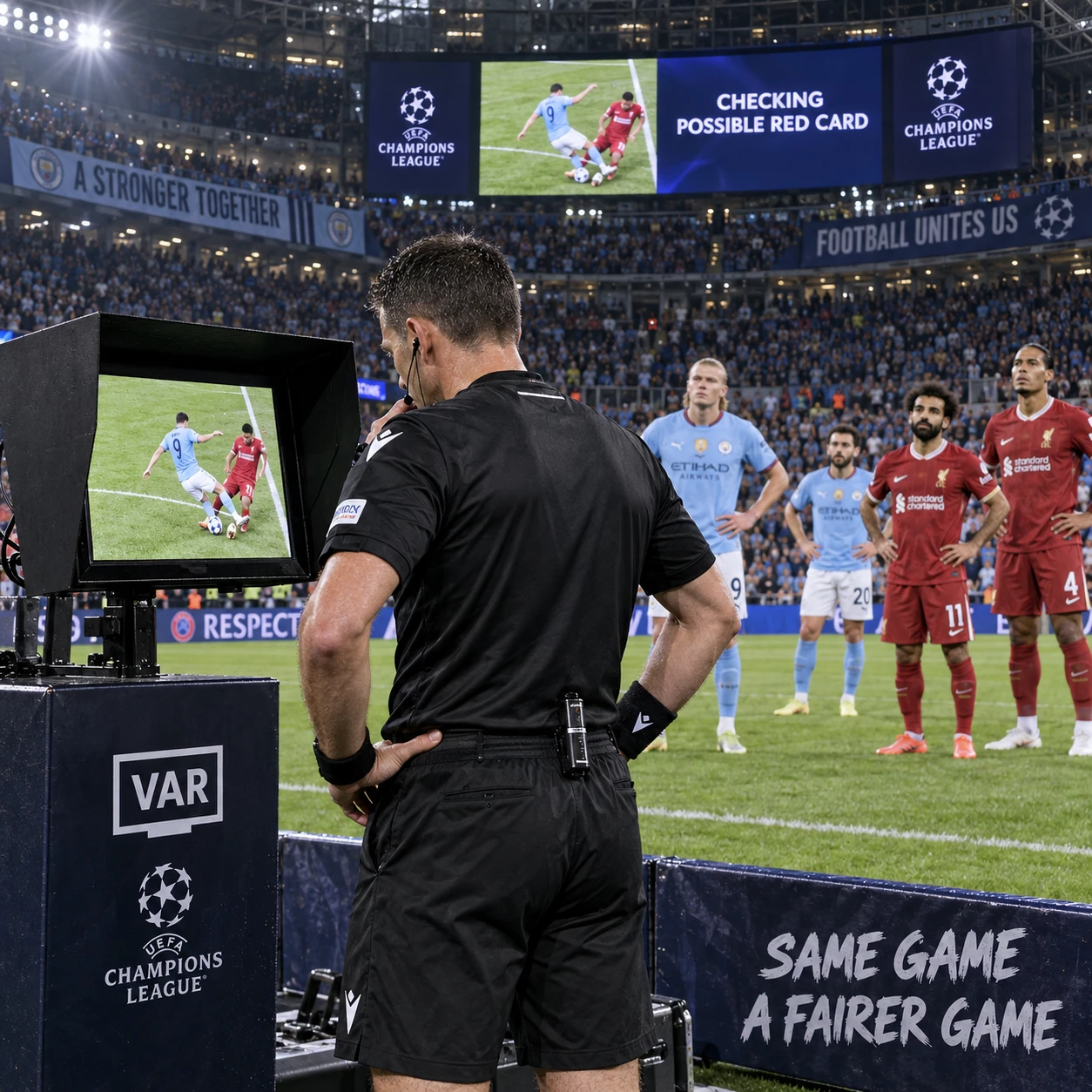
Video Assistant Referee (VAR) has changed how football handles some of its most consequential decisions. It gives the on-field referee access to video support for specific incidents, while leaving the final call with the referee. For viewers following live football streams, understanding the process helps explain why play pauses, what the officials are checking, and why a decision may change—or stand.
What VAR Is and Why Football Uses It
VAR is a video review system that assists the on-field referee with a limited set of match-changing decisions. It aims to correct clear and obvious errors or serious missed incidents, rather than re-referee every contest.
The Video Assistant Referee works with a VAR team, usually including assistant video officials and replay operators, in a Video Operation Room (VOR). They monitor relevant camera feeds and communicate with the referee over an audio link. The referee remains responsible for decisions on the pitch, including whether to accept advice, view a replay at the monitor, or continue the match.
VAR is designed as a safety net, not a replacement for the referee’s judgment. Football includes subjective calls, such as whether contact is enough to constitute a foul. Video can provide different angles and slow motion, but it cannot remove every ambiguity. A review is generally reserved for a possible clear and obvious error or a serious missed incident within the permitted categories.
VAR is also different from goal-line technology. Goal-line systems determine whether the whole ball has crossed the goal line and send a result to the referee, typically within seconds. VAR reviews broader incidents using video and officials’ judgment. The two technologies can support decisions in the same match, but they answer different questions.
How a VAR Review Works
A VAR review begins with an automatic check of a relevant incident, followed by communication with the referee if the video team spots a possible clear and obvious error or serious missed event. The referee makes the final decision, with or without an on-field review.
The process usually follows these steps:
- Incident check: The VAR team reviews eligible events, including goals, penalty decisions, direct red cards, and mistaken identity. This can happen while play continues.
- Possible error identified: If the video evidence suggests a reviewable problem, the VAR tells the referee what the footage shows.
- Decision route: The referee may accept the VAR’s information for a factual matter, such as an offside position, or go to the pitch-side screen for an on-field review when judgment is required.
- Final decision: The referee signals the outcome and restarts play. Depending on the review, the original decision may stand, be changed, or be replaced with a different ruling.
Not every check appears as a long stoppage. Some are completed in the background, and the referee may receive confirmation without watching the screen. An on-field review is more visible: the referee makes the review signal and watches selected footage at the monitor. The time needed depends on the incident, the available camera angles, and whether officials must establish details such as the point of contact or the sequence of events.
For viewers, the key distinction is between a check and a formal review. A check may confirm that no intervention is needed; a review indicates that the referee is considering video evidence before reaching or changing a decision.
Which Decisions Can VAR Review?
VAR can review incidents in four main categories: goals, penalty decisions, direct red cards, and mistaken identity. The exact procedures follow the competition’s rules, and reviews are limited to those categories.
- Goals and attacking-phase incidents: Officials can check whether a goal should stand, including relevant offences in the buildup, such as offside or a foul by the attacking team.
- Penalty decisions: VAR may review whether a penalty was wrongly awarded or a clear penalty offence was missed. The referee still judges issues such as whether contact was careless or sufficient to be a foul.
- Direct red cards: The review can address a possible direct red-card offence or a serious incident that the referee did not see. A second yellow card is generally outside the VAR review category.
- Mistaken identity: If the referee sanctions the wrong player in an incident involving a card, VAR can help identify the correct player.
A review does not automatically follow every collision, handball claim, or disputed throw-in. The incident must fit an eligible category, and intervention generally requires a clear and obvious error or a serious missed incident. Close calls can remain matters of interpretation, which is why two viewers may watch the same replay and still disagree with the final decision.
How VAR Affects Match Flow and Statistics
VAR can pause a match, extend the time before a restart, and change the official record of a goal, penalty, or card. Match statistics should therefore be read alongside the final ruling, not just the first event shown on a live feed.
A review can add stoppage time, interrupt an attacking sequence, or leave players waiting while officials check the footage. The delay varies; there is no single standard duration for every review. Some checks take only a short time, while complex incidents can require multiple angles and a referee’s visit to the monitor.
Reviews can also alter match timelines and event data. A goal may first appear in a live score and later be disallowed, or a penalty decision may be overturned before the kick is taken. Depending on the provider, match statistics may update with a delay or retain a provisional event briefly. For accurate tracking, compare the match clock and score with the referee’s confirmed decision and the competition’s official match report.
VAR does not change the meaning of every statistic, but it can affect the recorded outcome. A shot that appears to produce a goal may ultimately count as an offside or foul sequence; a card may be reassigned to the correct player. When comparing live data across services, remember that feeds can refresh at different speeds. A temporary mismatch does not necessarily mean the final statistics are wrong.
Watching VAR Decisions on Live Streams
To follow VAR during live football streams, watch for the referee’s review signal, listen for the broadcaster’s explanation, and check whether the on-field decision changes before relying on live score or event statistics.
Broadcasts may show a review graphic, selected replays, or commentary explaining the category under review. Coverage differs by competition and broadcaster; a stream may not include the same angles, audio, or official announcement as the stadium feed. Replays can also appear after the officials have already made their decision, so treat the referee’s signal and confirmed outcome as the authoritative match events.
A practical viewing routine helps keep the sequence clear:
- Note the original call, such as goal awarded or penalty given.
- Look for the referee’s review signal or an announcement that a check is underway.
- Wait for the referee to communicate the outcome before treating a score or card as final.
- Refresh match statistics after the restart, especially if the decision affects a goal, penalty, or player booking.
When the stream and statistics feed disagree, the disagreement may reflect different update times rather than a second decision. Follow the official match presentation or competition reporting for confirmation, and avoid drawing conclusions from a single replay angle. Camera perspective can make distance, contact, and player position look different from what officials see across several views.
VAR’s Benefits, Limitations, and Ongoing Debate
VAR can help correct major errors in high-impact situations, but it cannot guarantee perfect decisions or remove debate. Its value depends on the quality of the footage, the rules of the competition, and how officials apply judgment.
The clearest benefit is that officials can revisit an incident that may decide a goal, penalty, or dismissal. Multiple camera angles may reveal details that were difficult to see at full speed. VAR can also support more consistent application of factual decisions, such as whether a player was in an offside position, although the precise interpretation and available evidence still matter.
The trade-offs are visible during a match. Reviews interrupt momentum, can create uncertainty while players and viewers wait, and may not satisfy fans who disagree with the threshold for intervention. Slow motion can clarify where contact occurred, but it can also make ordinary movement appear more forceful than it seemed at full speed. For subjective decisions, video improves the evidence available; it does not turn judgment into a purely mechanical process.
Three points help put disputes in context:
- VAR does not review everything: It is limited to defined categories, so many routine referee decisions remain on-field calls.
- A review is not proof of an error: It is a way to check an eligible incident. The original decision may stand after review.
- More footage does not always mean certainty: Angles can be blocked or inconclusive, and some rules require interpretation rather than measurement.
For anyone following football streams and match stats, the most useful approach is to separate the original call, the review process, and the final decision. That makes it easier to understand what changed, what remained a matter of judgment, and why the match record may update after a pause.
VAR FAQ
Does VAR review every decision?
No. VAR checks eligible incidents in the four main categories: goals, penalty decisions, direct red cards, and mistaken identity. It does not review every foul, corner, or ordinary restart.
Can the referee change a VAR decision?
The referee makes the final decision on the field. After receiving VAR information or completing an on-field review, the referee can keep the original call or change it.
What is the difference between VAR and goal-line technology?
Goal-line technology determines whether the whole ball crossed the goal line. VAR uses video review to assist with several categories of decisions that may require factual checks or referee judgment.
Why do some reviews take longer than others?
Reviews take different amounts of time because incidents vary in complexity. Officials may need to compare camera angles, identify the relevant point in an attacking phase, or assess a subjective decision at the monitor.