Menorca by Sea in 2026: A US Traveler's Guide to Choosing Between a Private Day Boat, a Crewed Yacht, and a Full Superyacht Charter
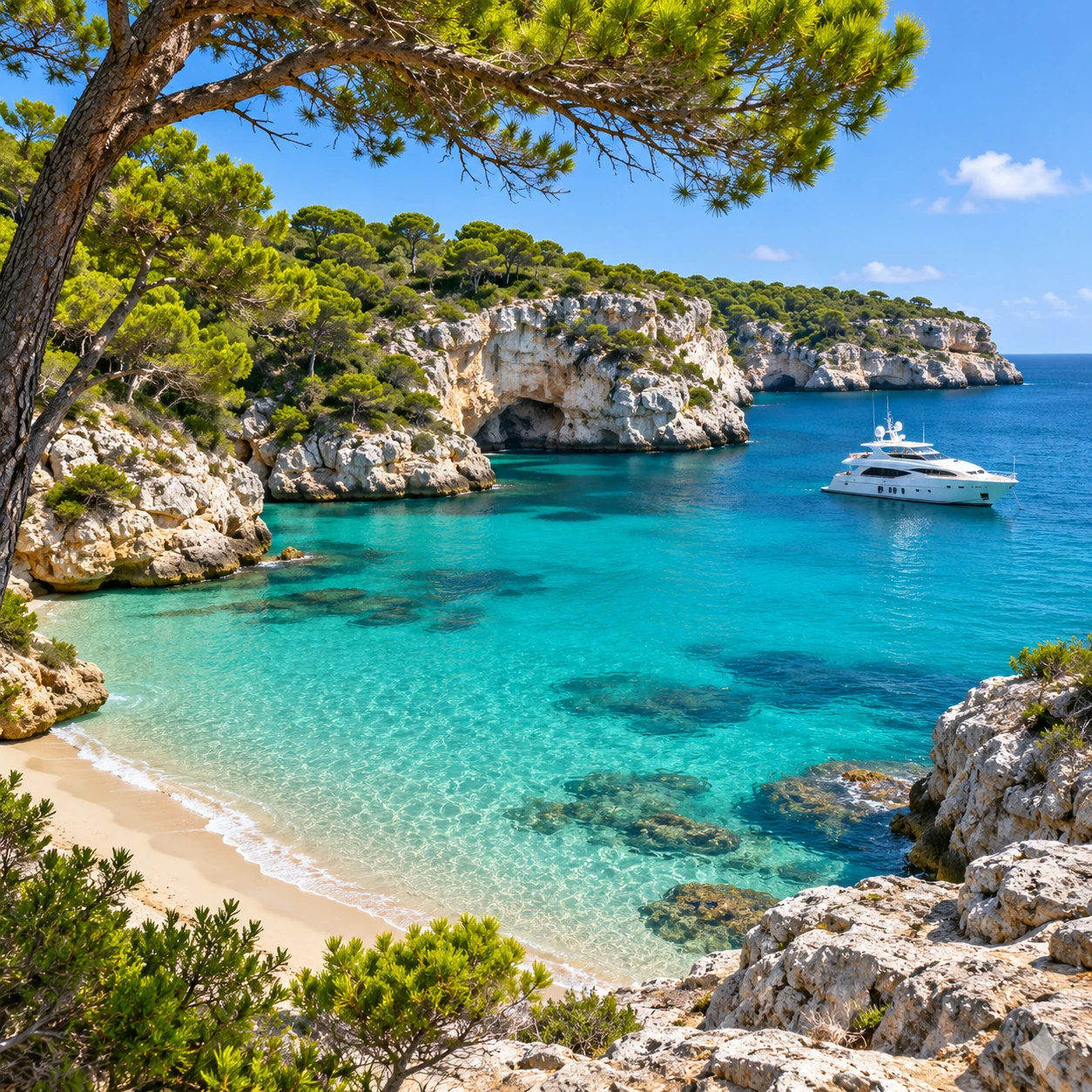
Something's shifted in how Americans plan Spain. For years the Balearics were a footnote tacked onto a Barcelona trip — fly in, see the Sagrada Família, take a ferry, spend two nights somewhere with a beach, fly home. In 2026 that itinerary reads dated. The US travelers I talk to are booking the islands as the destination itself, and Menorca is the one they come home still talking about. Quieter than Mallorca. Greener than Ibiza. Ringed with turquoise calas the road network simply can't reach. The good stuff is on the water.
Here's the problem I keep running into. There are three genuinely different ways to charter a boat in Menorca — a private day boat, a crewed yacht, a full superyacht charter — and they're sold as though the only difference is the price tag. They aren't interchangeable. Pick wrong and you either overspend on capability you'll never touch, or you under-book and spend your one perfect day crammed into something that doesn't fit your group. I'm writing this from a US angle: booking across a six-hour time difference, paying in euros, arriving through Madrid or Barcelona, and with no European boating license in your wallet. Let's walk through all three paths.
Why Menorca by Sea Makes Sense for a US Traveler in 2026
Menorca doesn't behave like the charter destinations most Americans know. In the Caribbean, or off Florida, you're usually sailing toward a reef, a sandbar, or a marina bar. Menorca is different in a structural way: the island has two coastlines with almost nothing in common. The south is long white-sand beaches — Son Bou, Cala Galdana, Cala en Turqueta — gentler water, easier swimming. The north is rock-bound and dramatic, red-brown cliffs and coves like Cala Pregonda and Cavallería that feel like another island entirely. Between the two sits the marine reserve around Illa de l'Aire, off the southeast tip, where the snorkeling is genuinely worth packing gear for.
What seals it is access. Macarella, Turqueta, Pregonda — those are the coves on every postcard. They're also a long, hot walk or a crowded bus ride from anywhere you can park. From an anchorage, they're a fifteen-minute swim. That gap between 'reachable by road' and 'reachable by sea' is the whole argument for getting on a boat.
Add the 2026 context. North American demand has kept climbing since the travel rebound, and Menorca's seasonal cap on visitor numbers has pushed travelers toward marine-based itineraries — you can see stretches of the island that land-based tourism is deliberately limited from touching. For US vacation calendars, late June and September are the sweet spots: warm water, thinner crowds, airfare that isn't punishing.
What Sailing Actually Costs Compared to a Resort
Let me reframe the price conversation before it turns into a luxury pitch. A beach club day for four in the Balearics — loungers, lunch, a couple of rounds of drinks, the umbrella rental — regularly lands in the several-hundred-euro range. Split a skippered day boat four ways and you're often in the same ballpark, sometimes below it, with the entire coastline as your venue instead of one roped-off section of sand. That's the honest way to read everything that follows: this is a value decision, not a splurge decision.
The Three Options at a Glance
Before the deep dives, here's the mental map I'd sketch for a friend. A private day boat is small — six to ten people, half-day or full-day, self-drive or with a skipper, no overnight. A crewed yacht is 40 to 60 feet, professionally run, usually a captain plus a host or cook, bookable by the day, the weekend, or the week. A superyacht charter is 24 meters and up, permanent crew of three to twelve, water toys, tenders, and a full week as the standard unit. Price bands climb accordingly, but so does what's included — which is exactly where most people get confused.
The One-Question Test
Here's the shortcut I keep coming back to, and it settles roughly 80% of these decisions on its own: is the boat the transport, or is the boat the trip?
A day boat is transport to a beach. You use it to reach water you couldn't otherwise reach, and the day is about what you do once you're there. A superyacht is the destination itself — you could spend a week aboard and never feel like you missed anything ashore. Crewed yachts sit in between, and where they land depends on how long you book. Hold that question in mind for the rest of this piece.
Private Day Boats — Freedom on a Realistic Budget
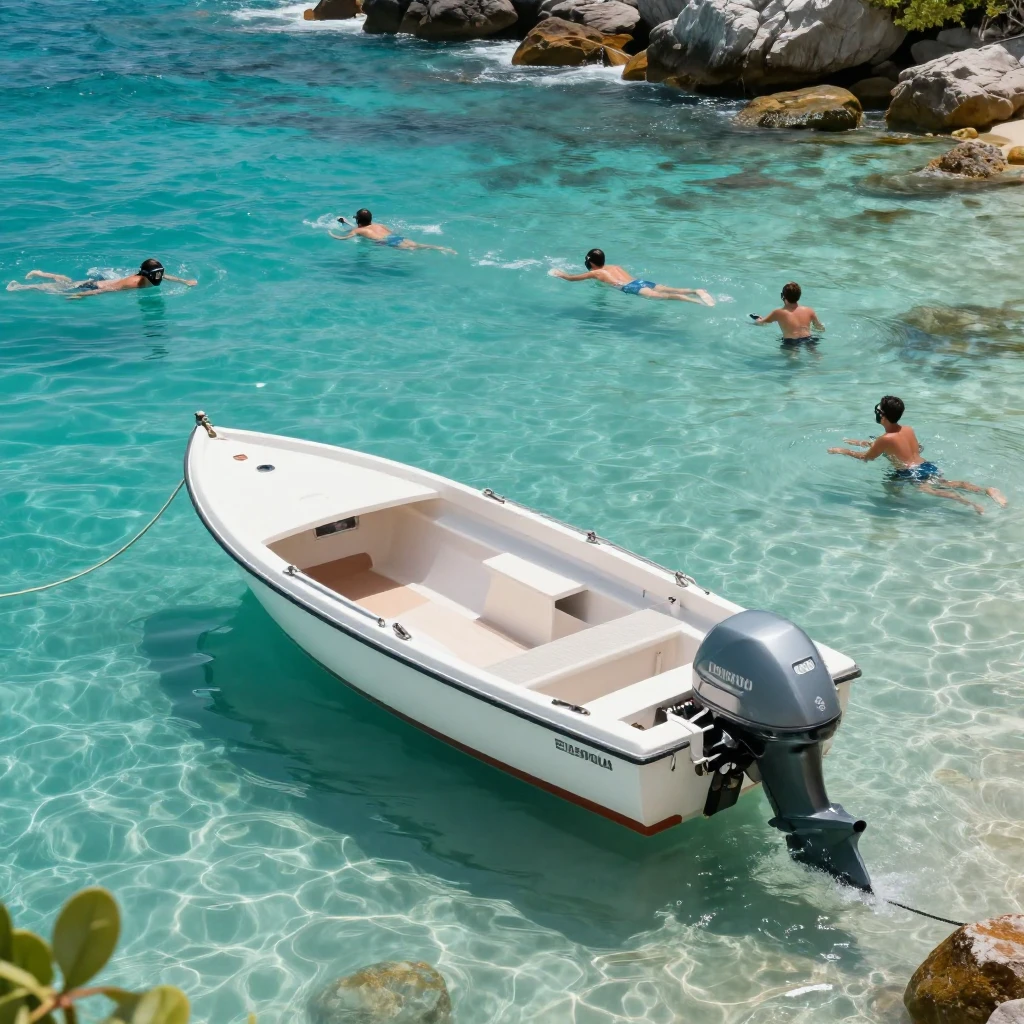
For most US visitors this is the entry point, and it's a good one. Menorca has two sub-variants worth knowing. Bareboat means you drive: no captain, lower cost, and a license requirement that trips up a lot of Americans. Skippered means a local captain handles navigation, anchoring, and the wind calls while you swim, eat, and do nothing productive. Formats are typically half-day or full-day, sometimes with fuel included and sometimes not — ask explicitly, because it moves the real price by a meaningful margin. A lunch stop in Fornells on the north coast or Cala Galdana in the south is usually doable if you plan the route around it.
Be honest about the ceiling, though. No overnight. Weather-dependent in a way that isn't negotiable. Limited shelter if the tramuntana wind picks up from the north — those beautiful rock-bound coves turn uncomfortable fast. And if you want to see current availability and boat classes before committing to a date, it's worth browsing day boats for a private Menorca outing rather than guessing from photos.
Licensing, Fuel, and the US-Traveler Reality
Practical friction time. To bareboat in Spain, US boaters generally need an ICC — International Certificate of Competence — or a recognized equivalent. A state boating license and a lifetime of lake experience do not automatically translate into a Spanish bareboat contract. Most Americans end up hiring a skipper, and honestly? That's usually the better call anyway. Local captains know which cove is sheltered from which direction, where the Posidonia seagrass shouldn't be anchored over, and which beach bar is worth the detour.
Also budget for fuel deposits, damage waivers, and the small stuff that adds up. One cultural detail: US-style tipping norms don't map cleanly onto Spanish charter crews. Ask the operator what's customary instead of tipping at American percentages out of habit.
Crewed Yachts — The Middle Ground Most Travelers Overlook
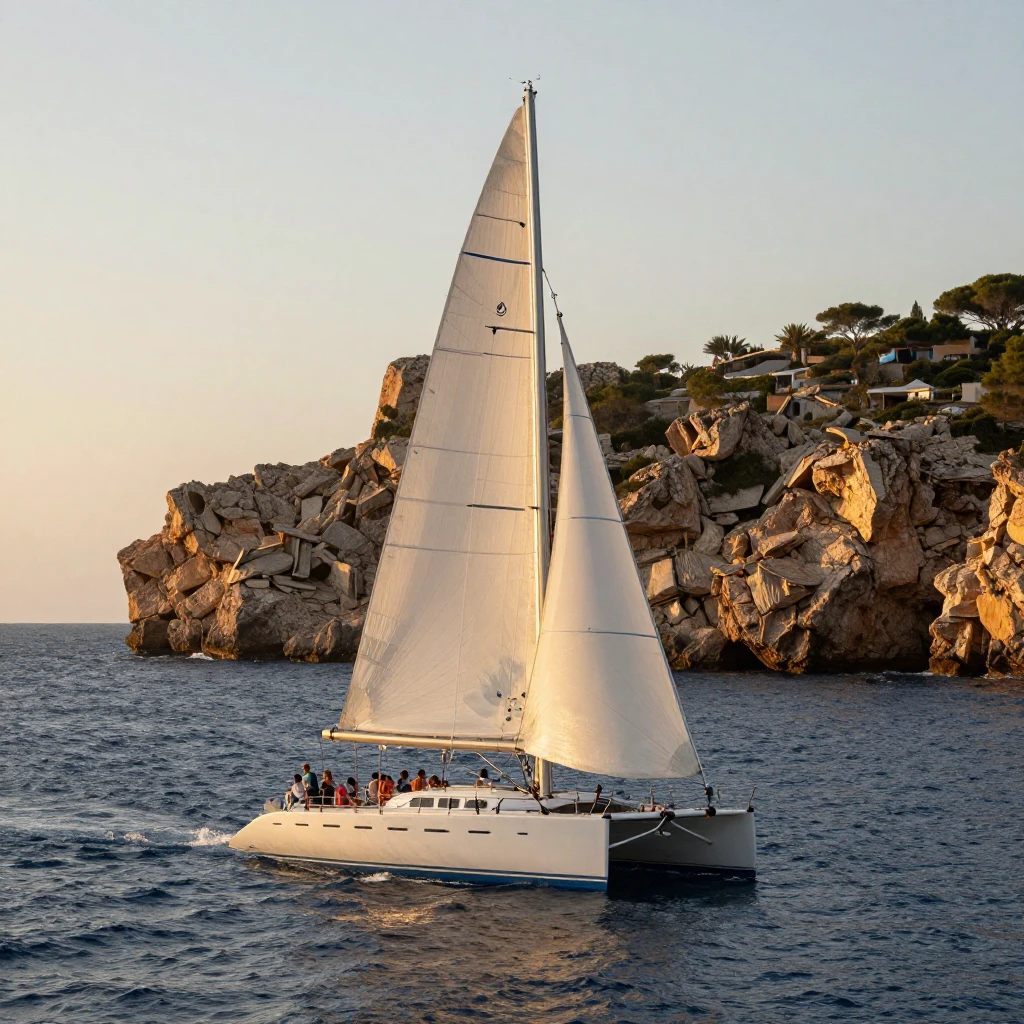
This is the category US travelers miss most often, which is a shame, because it solves the exact problem most groups arrive with. A crewed yacht is a professionally run monohull or catamaran, typically 40 to 60 feet, with a captain and often a host or cook aboard — bookable by the day, the weekend, or the week.
So what does 'crewed' buy over 'skippered'? Meals prepared aboard instead of a cooler and a deli run. Local knowledge that shapes the itinerary around conditions rather than a fixed route. And the removal of responsibility — nobody in your group is watching the anchor drag while everyone else eats. It fits families with mixed ages who need shade and a bathroom and a place to nap, groups of six to ten, and travelers who want the sailing experience without wanting to run anything. If you're trying to match a specific boat to a specific group size, the fleet at https://menorcasuperyachtrental.es/yacht/ is the place to start browsing by capacity and layout.
Day, Weekend, or Week — How Duration Changes the Math
Per-day cost drops as the booking lengthens. A single crewed day carries the full setup cost — provisioning, crew time, turnaround — across one charter. Stretch it to a week and those costs spread out while the boat stays in your hands. The breakeven point against a hotel-plus-restaurant itinerary for a group of eight usually arrives somewhere between three and five nights, depending on how much you'd otherwise spend on waterfront accommodation and dinners out. Past that, it isn't close.
Full Superyacht Charters — When the Boat Is the Destination
The top tier, and the one that needs the most honest framing for a US audience. A superyacht charter in the Balearics in 2026 generally means vessels 24 meters and up, a permanent crew of three to twelve, formal crew quarters so guests never feel crowded, water toys and tenders, and an interior that works as a private villa with a hull around it.
Realistic use cases: milestone birthdays and anniversaries, multi-generational groups where grandparents want quiet and teenagers want toys, corporate trips where the boat doubles as a venue. Then there's the administrative layer nobody puts in the brochure — APA (advance provisioning allowance), VAT, delivery fees if the vessel repositions. The quoted weekly rate is never the final number. Budget 25–35% above it as a working rule and you'll land in the right neighborhood.
When you move from general interest to a specific vessel enquiry, start with a superyacht charter Menorca search rather than piecing it together from broker listings across three countries.
The Booking Lead Time Nobody Warns You About
Peak July and August availability in Menorca is typically committed many months ahead — often the previous autumn for the best boats. If your dates are locked and you're looking at a summer trip, flexibility on vessel matters more than flexibility on dates. If your dates are fixed and your vessel preference is firm, book earlier than feels reasonable.
How to Choose — A Framework for US Travelers
Work through the variables in priority order. Group size first: four, eight, or twelve-plus changes everything. Trip length second. Third, ask whether anyone actually wants to sail or whether everyone just wants to swim — those are different boats. Fourth, set a real budget ceiling including fuel, APA, and tips. Fifth, be honest about your appetite for planning.
Three profiles, matched:
- A couple on a long weekend — skippered day boat, maybe two of them. Low commitment, high payoff, budget stays sane.
- A family of six with a week — crewed catamaran for four or five nights, hotels on either end. Shade, meals aboard, and a captain who knows where the water is calm.
- A group of twelve celebrating something — superyacht, booked early, APA budgeted properly. At that size, a day boat isn't a compromise, it's a mistake.
Booking from the US — Timing, Payment, and Ports
Reserve early for June through September. Expect euro-denominated deposits, and check whether your card charges a foreign transaction fee — on a five-figure charter that 3% is real money. Mahón (Maó) and Ciutadella are the main embarkation points; Mahón suits south-coast itineraries and the marine reserve, Ciutadella puts you closer to the north's dramatic coves. Build arrival day into the plan too: the ferry or short flight from Barcelona or Madrid eats a half-day, so don't schedule a charter for the morning you land.
Common Mistakes to Avoid
- Booking on price alone. Read what fuel and APA actually cover before you compare quotes.
- Assuming a US boating license travels. It usually doesn't, and the skipper you hire instead is often the upgrade.
- Scheduling a boat day mid-heatwave with zero shade aboard. Menorca's July sun is not Florida's July sun.
- Picking a north-coast anchorage on a windy day. Flip to the south; the island gives you options for a reason.
- Forgetting that a boat day is weather-contingent. Put it early in the trip, where you still have room to reschedule.
Come back to the one-question test: transport or destination. A day boat gets you to the cala, a crewed yacht makes the passage part of the day, a superyacht is the trip, full stop. All three are legitimate at their own scale, and none is the 'wrong' answer in the abstract. The real error is defaulting to whichever one you happened to hear about first instead of matching the boat to the people standing on the dock with you.
So do it in that order. Pick the dates, count the people, then choose the boat — not the other way around.